Immerse yourself in the soulful beats, rhythmic steps, and heartfelt traditions of Ranikhet — where every song tells a story, and every dance celebrates life. Presented by AI Hotels Group.
Introduction: Where Culture Meets the Mountains
Nestled amidst the pine-covered hills of Uttarakhand, Ranikhet is more than just a scenic getaway — it's a land where music and dance breathe life into culture. The melodies echoing from the valleys and the rhythm of traditional dances represent the heart and soul of the Kumaoni people. Every festival, celebration, or local gathering in Ranikhet showcases the region's rich heritage through its folk traditions.
With AI Hotels Group as your travel companion, you don't just visit Ranikhet; you experience its heartbeat — its songs, dances, and the people who keep these traditions alive.
The Essence of Folk Music in Ranikhet
Music in Ranikhet is not merely entertainment — it's emotion, storytelling, and spirituality combined. The traditional Kumaoni folk songs often narrate tales of love, devotion, seasons, and everyday life in the hills. Passed down through generations, these songs preserve the soul of Uttarakhand's mountain culture.
The musical instruments used are as unique as the melodies themselves. Instruments like the dhol, damau, hurka, and turri accompany singers, creating rhythmic harmonies that can be heard echoing through villages during fairs and festivals. The sound of the dhol-damau marks celebrations, weddings, and religious ceremonies across Ranikhet.
Popular Folk Music Traditions of Ranikhet
- Jhora and Chanchari: These are community songs often sung during social gatherings and festivals. The rhythm of claps and synchronized steps brings the community together in joyful harmony.
- Chhapeli: A romantic duet performed by couples, celebrating love and relationships with graceful movements and expressive lyrics.
- Basanti Geet: Sung to welcome the spring season, these songs symbolize new beginnings and happiness after the cold winter months.
- Mangal Geet: Traditional wedding songs sung by women to bless newlyweds and invoke prosperity.
The Vibrant Folk Dances of Ranikhet
In Ranikhet, every dance step tells a story. Folk dances are not choreographed for show — they are a way of expressing gratitude to nature, gods, and the community. The costumes, music, and movements all reflect the deep connection between people and the land.
The most popular folk dances include:
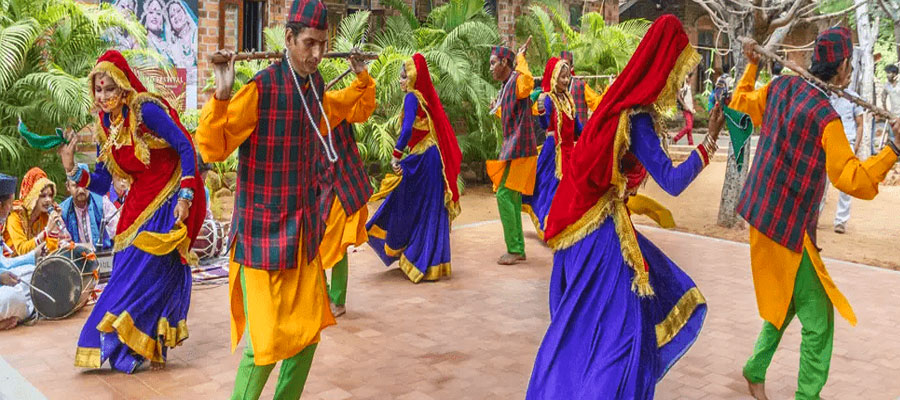
- Chholiya Dance: A traditional war dance performed by men wearing colorful costumes and wielding swords. Originally meant to celebrate victories, today it represents courage, devotion, and unity during weddings and festivals.
- Jhora Dance: A graceful group dance performed by men and women holding hands, moving in circular patterns to the rhythm of folk songs. It's often seen during Holi and Basant Panchami celebrations.
- Jhumeila and Chauphula: Performed during harvest seasons and local festivals, these dances celebrate joy, love, and nature's bounty.
Costumes and Instruments: A Colorful Display of Heritage
The beauty of Ranikhet's folk art lies in its authenticity. Performers wear vibrant traditional attire — women often dress in colorful ghagras and pichhoras, while men wear kurta-dhotis with traditional headgear. Every color and pattern symbolizes cultural pride.
Accompanying instruments like the dhol, damau, ransingha, and hurka create a lively rhythm that captures the spirit of Ranikhet. When these beats fill the mountain air, even the shyest spectator finds themselves tapping to the tune.
Festivals that Keep the Tradition Alive
Ranikhet's festivals are incomplete without folk music and dance. During celebrations like Harela, Bikhauti, and Uttraini, locals gather in open fields, temples, or village courtyards to perform traditional songs and dances. The sound of laughter, instruments, and chanting fills the valleys with life.
These cultural festivities are not just entertainment; they are living traditions that connect generations. Youngsters learn these art forms from elders, ensuring that Ranikhet's cultural identity remains strong and thriving.
AI Hotels Group - Your Gateway to Ranikhet's Living Traditions
At AI Hotels Group, we believe that travel is not just about sightseeing but about feeling the soul of a place. When you visit Ranikhet with us, we help you witness these cultural performances up close — from village fairs to temple festivities.
Our local tours include guided experiences where travelers can interact with folk artists, attend live performances, and even try their hand at playing a traditional instrument. Whether you're a culture enthusiast, photographer, or traveler seeking authenticity, we'll make your journey unforgettable.
Preserving Ranikhet's Musical Heritage
As modernization grows, many folk traditions face the risk of fading away. AI Hotels Group supports local communities by promoting cultural tourism that values and preserves these ancient art forms. Through our collaborations with village artists, we help sustain their livelihood while offering travelers a deeper, more meaningful experience.
When you choose AI Hotels Group, you contribute to preserving Ranikhet's heritage — one dance, one song, and one story at a time.
Conclusion: Feel the Rhythm of Ranikhet
Folk music and dance are not just art forms in Ranikhet — they are the heartbeat of its culture. They reflect the emotions, joys, and struggles of the mountain people, passed down lovingly through generations. Every performance is a celebration of identity, harmony, and devotion.